The blog by FLexGrass.

The FLexGrass blog features articles dedicated to the design, construction, and maintenance of sports surfaces. Through this content, we share technical insights, industry updates, and useful information for those involved in sports facilities. The articles cover topics related to different types of surfaces, the technologies used in sports fields, and practices for managing playing surfaces.

Evolution of sports surfaces in professional football leagues

Sports surfaces in professional leagues have evolved significantly in recent years, driven by an increasingly clear requirement: to guarantee consistent performance in contexts of ever more intensive use.A football pitch is no longer just a playing surface. It is a technical infrastructure that must withstand demanding schedules, closely spaced events and increasingly high quality standards. From natural grass to the first technical solutionsFor many years, natural grass was the only solution for professional football pitches.Playing quality depended closely on turf management and weather conditions, with results that often varied throughout the season.The first developments focused on improving agronomic techniques and infrastructure, particularly sub-bases and drainage systems, which are fundamental for increasing pitch stability. The increase in usage intensityAs sporting calendars evolved, the number of matches and activities increased significantly.Daily training, domestic and international competitions, non-sporting events: all of this highlighted a limitation of traditional pitches, namely the difficulty of maintaining consistent performance under high usage loads.This change has driven the move towards more structured and higher-performing solutions. The introduction of hybrid systemsHybrid systems are one of the most important steps in the evolution of sports surfaces.By combining natural turf with synthetic reinforcement, these solutions have improved surface stability and resistance to wear.In professional leagues, the adoption of hybrid systems has grown rapidly, especially in stadiums and high-intensity training centres. Performance and increasingly high standardsToday, in professional contexts, the pitch must guarantee consistent playing conditions throughout the entire season.Surface levels, stability and surface response are fundamental elements that can no longer depend only on weather conditions or turf management.Sports surfaces are designed to maintain high standards even in complex operating conditions. The role of infrastructureThe evolution of surfaces does not concern the playing layer alone, but the entire pitch system.Sub-base, drainage, water management and integrated technologies are increasingly central elements in sports facility design.It is the integration of these components that determines the quality and durability of the surface over time. Towards increasingly high-performance surfacesThe direction is clear: surfaces designed to guarantee availability, reduce the impact of wear and maintain high performance.Innovation focuses on the ability to integrate technical solutions and agronomic management, with the goal of making the pitch more reliable and stable. The contribution of FLexGrassIn this context, FLexGrass develops solutions for professional sports surfaces based on hybrid systems and integrated pitch design.Experience gained in high-level environments makes it possible to work on every component of the system, contributing to the evolution of sports surfaces towards increasingly high standards. The evolution of sports surfaces in professional leagues is the result of a broader transformation in the way pitches are designed and managed.Today, surface quality is no longer an accessory element, but a central component of sporting performance.Contact us to discuss advanced solutions for professional sports surfaces.

The invisible problem in sports fields: loss of surface levels over time

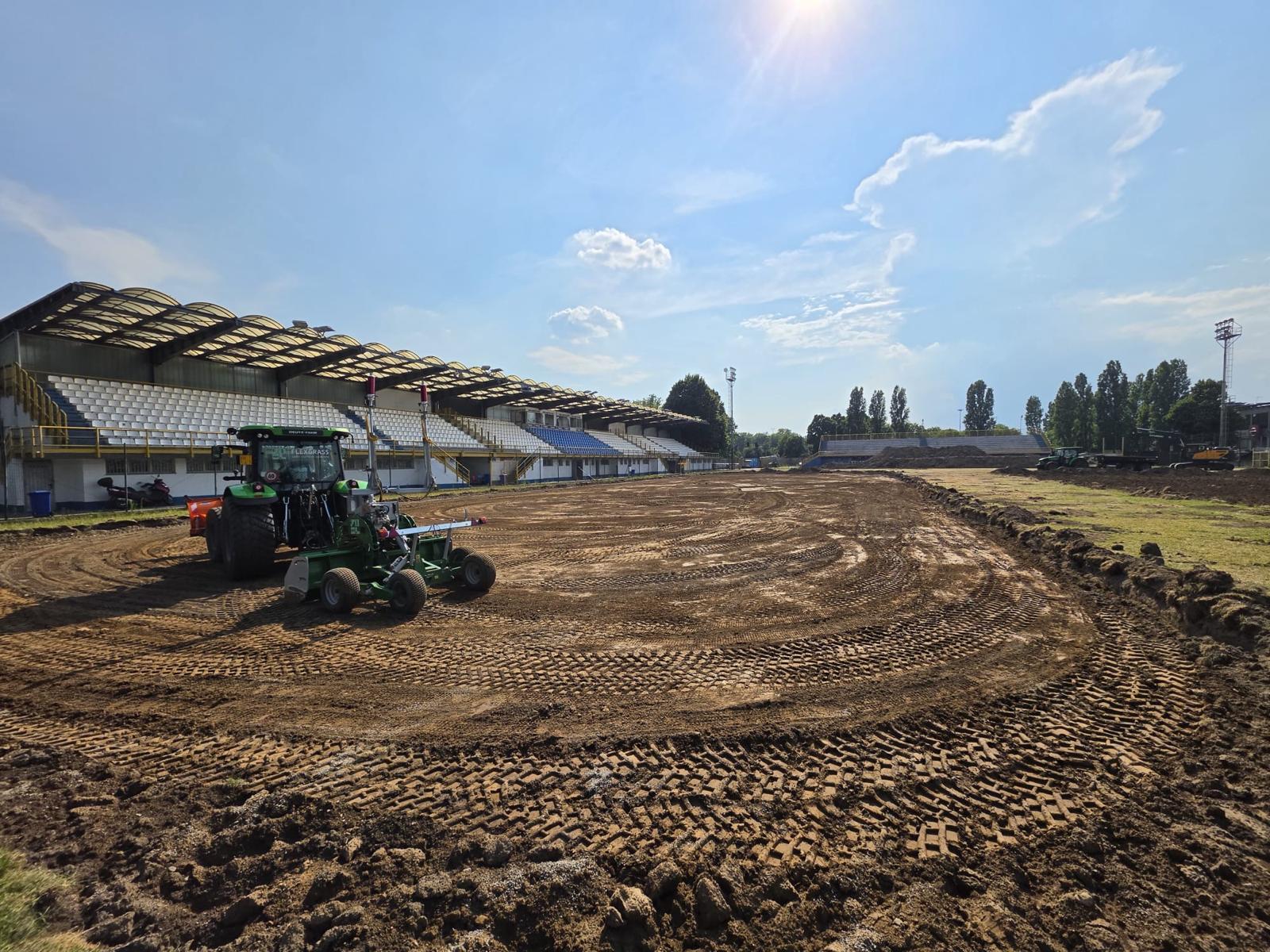
A sports field may appear to be in good condition while already having lost one of its fundamental characteristics: surface levels.Loss of levels is a progressive phenomenon and is often difficult to see in the early stages, but it directly affects playing quality, surface stability and player safety.It is not an aesthetic problem. It is a structural problem. What loss of surface levels meansThe levels of a sports field refer to the surface’s ability to remain even over time, without depressions, irregularities or changes in ground response.When this condition is lost, the pitch no longer reacts consistently to stress: ball behaviour changes, the ground loses stability and the playing experience is affected. Main causesRepeated mechanical stressTraining sessions and matches concentrate wear in the same areas of the pitch.Over time, these stresses create micro-deformations which, if not managed, develop into more visible irregularities. Inadequate sub-baseThe works and materials used to build the correct sub-base are decisive.A base that is not stable or not correctly designed tends to settle over time, compromising surface levels. Water managementInefficient drainage can encourage standing water and loss of soil consistency.When water is not managed correctly, it becomes one of the main factors behind surface deformation. Uncoordinated maintenanceSurface-only interventions carried out without a structural view of the pitch may solve the problem temporarily without removing the cause.Over time, this leads to progressive deterioration of pitch conditions. Consequences for performanceLoss of levels directly affects playing quality.The pitch becomes less predictable, ball response is no longer uniform and the risk of instability during play increases.In professional environments, this results in an overall reduction in surface quality and greater operational issues. Why the problem starts below the surfaceIn most cases, loss of levels is not caused by the turf alone, but by the structure beneath it.Sub-base, drainage and soil profile determine how the pitch behaves over time.When these elements are not designed or built correctly, surface deterioration becomes inevitable. How to intervenePitch analysisThe first step is to understand the cause of the problem, assessing not only the surface but the entire construction system. Structural worksWhen loss of levels is advanced, it may be necessary to intervene on the sub-base or pitch infrastructure, not only on the surface layer. Solutions designed for stabilitySystems designed to improve surface stability, such as hybrid solutions, can help limit deformation and maintain a more even pitch over time. Management and maintenanceCoordinated maintenance, supported by technical and agronomic expertise, allows the grounds team to monitor the pitch and intervene before the issue becomes structural. An underestimated problemLoss of surface levels is one of the most underestimated issues in sports field management, precisely because it is not always visible in the early stages.When it becomes visible, more complex interventions are often already required.For this reason, prevention and the quality of the initial design are fundamental. A high-performance sports field is not only a matter of surface quality, but of long-term stability.Surface levels are one of the most important indicators of pitch quality and depend on how the field has been designed, built and managed.Contact us to assess the condition of your pitch and identify targeted interventions to maintain stability and performance over time.

How many playing hours can a professional football pitch withstand?

A professional football pitch is not designed around a theoretical number of hours. It is designed to sustain a defined level of use while maintaining consistent performance.In a professional environment, this means managing daily training, closely scheduled fixtures and variable weather conditions without compromising stability, surface levels and playing quality.The real carrying capacity of a pitch depends on how it has been built and managed: surface type, sub-base, drainage and maintenance determine how long the pitch can remain in good playing condition. The surface makes the differenceThe number of hours a pitch can sustain varies significantly depending on the playing surface.A natural grass pitch provides highly valued playing conditions, but it is more affected by wear when usage cycles become intensive.A hybrid system, thanks to synthetic reinforcement, improves surface stability and increases the pitch’s ability to withstand a high number of playing hours.In professional contexts, this difference becomes particularly important during periods when training sessions, matches and additional activities are concentrated within short timeframes. What lies below the surface also mattersThe number of hours a pitch can sustain does not depend only on the turf.Sub-base quality, the works carried out to build it, correct management of falls and levels, and the integration of drainage systems are all essential factors.A pitch built on a stable, correctly designed base maintains its technical characteristics for longer, whereas an inadequate structure accelerates surface deterioration and reduces availability. Intensive use and pitch recoveryAnother key aspect is the recovery capacity of the surface.It is not only about how many playing hours the pitch receives, but also how quickly it can recover between uses.In professional pitches, the real challenge is often repeated stress within short periods: daily training, fixtures close together and difficult weather. In these cases, a surface designed for intensive use can maintain more stable performance and reduce the risk of early deterioration. Maintenance directly affects playing hoursMaintenance is a decisive factor in the operational lifespan of a pitch.Correct turf management, supported by planned operations and specific agronomic expertise, preserves surface performance and keeps the pitch playable for longer.By contrast, inadequate maintenance quickly reduces the pitch’s ability to sustain play, increasing downtime and the need for corrective works. Natural and hybrid pitches: different carrying capacitiesAt high level, the difference between natural and hybrid pitches is most evident in the ability to sustain continuous use.Natural pitches can deliver excellent playing conditions, but they require very careful management to maintain high standards when playing hours increase.Hybrid pitches, on the other hand, are designed specifically to improve surface resistance, distribute stress more effectively and guarantee greater continuity of use throughout the season.For this reason, in professional environments hybrid technology is often the most suitable solution when the pitch must withstand heavy workloads. A design issue, not just a surface issueA professional football pitch’s ability to sustain many playing hours does not depend on a single element, but on the overall quality of the project.Surface, sub-base, drainage, civil works and maintenance must be designed as parts of one system.This balance determines whether the pitch will maintain high performance over time or quickly show signs of wear and loss of quality.A professional football pitch can sustain very different numbers of playing hours depending on how it has been designed, built and managed.Where use is intensive and continuity of play is essential, the quality of the construction system and the choice of surface become decisive.For this reason, assessing how many playing hours a pitch can withstand really means assessing the overall quality of the project.Contact us to discuss the most suitable solutions for ensuring long-term pitch availability and high performance.

Sports field drainage management: mistakes to avoid

Drainage is one of the most critical elements in sports field management, yet it is often underestimated until clear problems appear.Standing water, loss of ground stability and turf deterioration are often the result of mistakes in the design or management of the drainage system.Correct drainage work means preserving pitch performance and guaranteeing availability over time. Design-stage mistakesOne of the most common mistakes is designing the drainage system without a detailed assessment of the site characteristics.Soil type, climate conditions and the management of falls and levels are fundamental elements that must be analysed from the earliest design stages.A system designed without considering these factors may be inefficient and can compromise pitch performance. Incorrect falls and levelsManaging falls is decisive for correct water run-off.Insufficient or poorly distributed gradients prevent natural water movement and encourage surface ponding.This problem is not always immediately visible, but over time it can have major consequences for pitch stability. Poor integration with the sub-baseDrainage cannot be treated as a separate element. It must be integrated with the sub-base structure.The works and materials used to build the correct sub-base must be consistent with the drainage system to ensure continuous water movement.Poor integration between these elements can reduce drainage efficiency and compromise pitch performance. Neglected maintenanceEven a well-designed drainage system can lose efficiency over time if it is not managed correctly.Material build-up, soil compaction and wear on system components can reduce the drainage capacity of the pitch.A planned maintenance programme helps keep the system efficient and prevents more complex problems. Uncoordinated pitch managementAnother frequent mistake is managing the pitch without an overall view of the system.Isolated surface operations, carried out without considering drainage behaviour, can be ineffective or even make the situation worse.Pitch management must be developed in a coordinated way, taking into account the interaction between surface, sub-base and drainage system. Consequences of drainage mistakesDrainage mistakes have a direct impact on pitch performance.Unstable surfaces, reduced playing quality and restrictions on use are among the most common consequences.In professional environments, these problems lead to operational difficulties and additional costs linked to corrective works. How to avoid these problemsAvoiding drainage management mistakes requires a technical approach that starts with design and continues throughout pitch management.Site analysis, material selection, correct sub-base construction and planned maintenance are key elements in delivering an effective drainage system.FLexGrass integrates drainage into the complete pitch design, developing solutions that help maintain performance and availability over time. Drainage is an invisible but decisive element in the functioning of a sports field.Design or management mistakes can quickly compromise surface performance, while a well-developed system preserves pitch quality over the long term.

Hybrid pitches: differences between horizontal systems and stitched systems

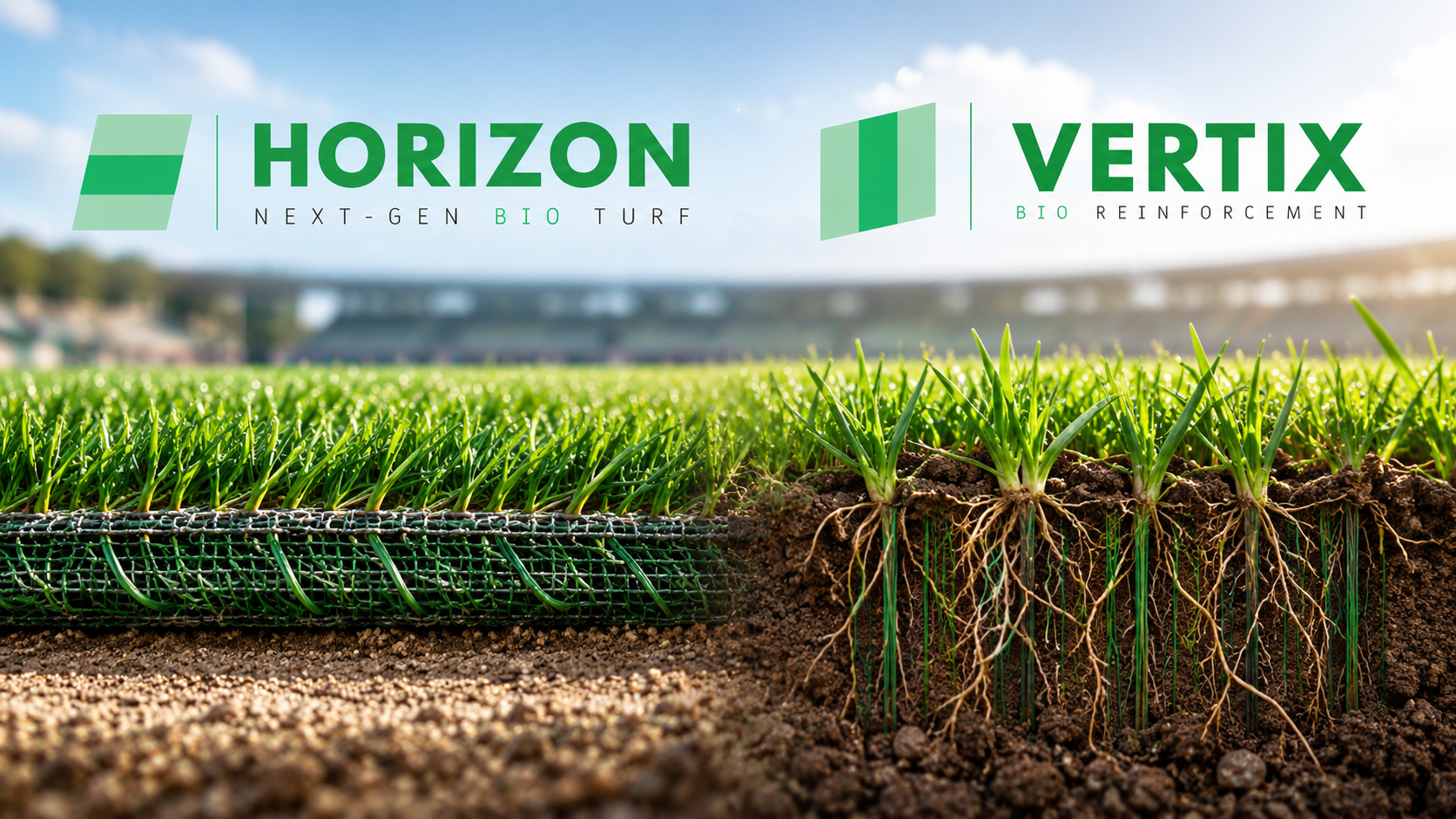
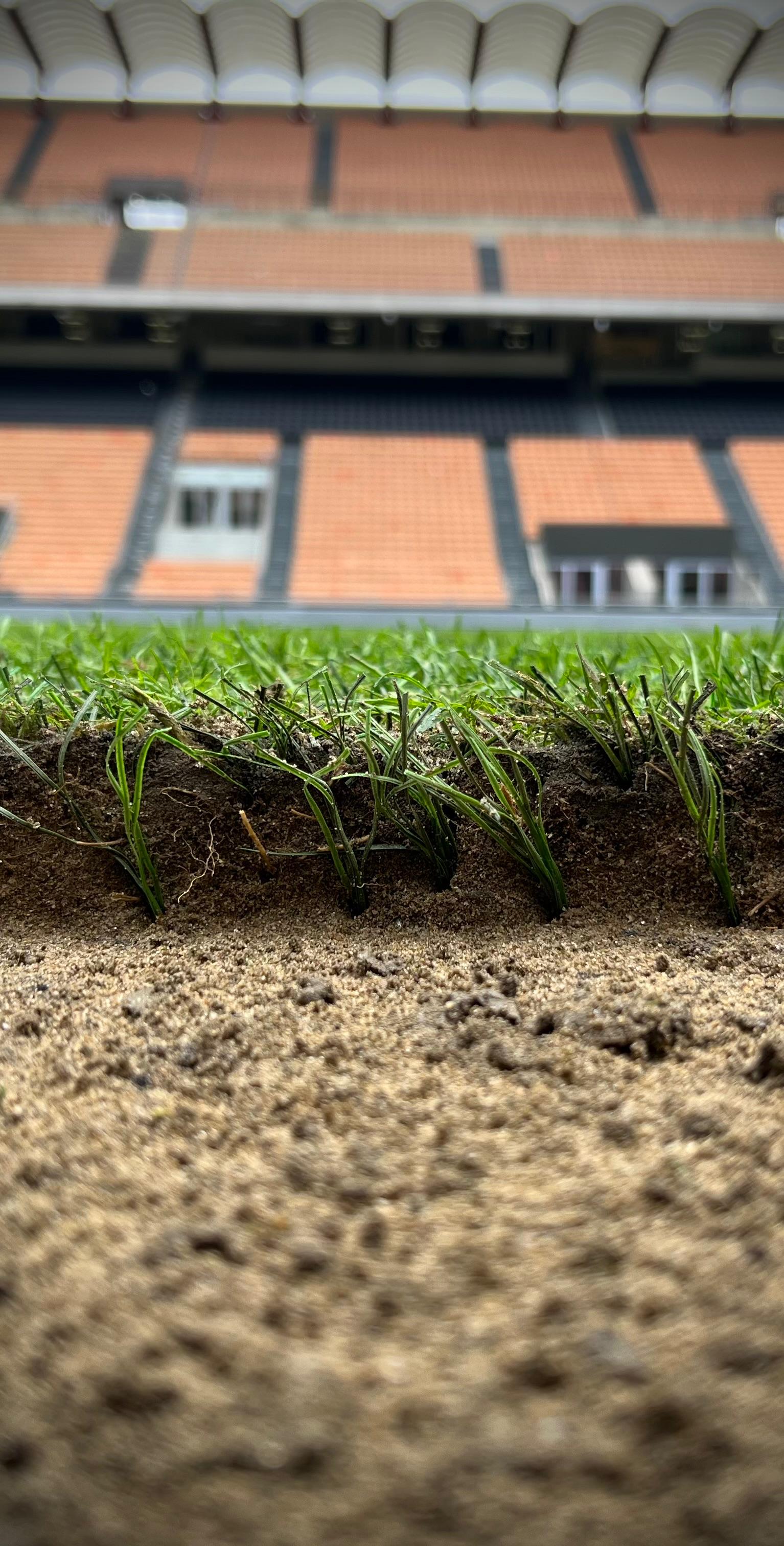
Hybrid pitches are now one of the most widely used solutions in professional football, thanks to their ability to combine the behaviour of natural grass with synthetic reinforcement systems.Within this category, however, different technologies are available, each developed to meet specific operational requirements. The main distinction is between horizontal reinforcement systems and stitched systems, based on the vertical integration of synthetic fibres.Understanding the differences between these solutions is essential when selecting the most suitable system for a stadium or training-ground environment. Horizontal hybrid systemsHorizontal systems are based on the use of a synthetic backing integrated at the base of the turf carpet.This layer, generally made up of a mat with synthetic fibres, is laid and then integrated with natural turf, creating a structure that helps stabilise the playing surface.One of the main features of these systems is installation speed, especially when pre-grown hybrid turf rolls are used.This solution allows work to be completed in reduced timeframes and the pitch to be brought into play relatively quickly, making it particularly suitable where operational windows are tight. Stitched hybrid systemsStitched systems involve inserting synthetic fibres directly into the soil using specialised machines that stitch the reinforcement into the pitch.The fibres are integrated at depth, creating a more compact and resistant structure in which the natural component remains dominant but is supported by a distributed reinforcement.This solution provides high surface stability and a greater capacity to withstand intensive use over time.Installation requires a more structured programme than horizontal systems, but it provides deeper integration between the rootzone and the synthetic reinforcement. Main differences between the systemsThe difference between horizontal and stitched systems mainly lies in how the reinforcement is integrated into the pitch structure.Horizontal systems work at the base of the turf carpet, offering a faster and more flexible installation solution.Stitched systems work directly within the soil profile, providing deeper reinforcement and greater long-term resistance.The choice between the two depends on several factors, including available timeframes, expected usage levels and the characteristics of the facility. When to choose a horizontal systemHorizontal systems are particularly suitable when rapid intervention is required or when the club needs a solution that allows the pitch to be brought back into use quickly.They are appropriate for contexts where flexibility and installation speed are a priority. When to choose a stitched systemStitched systems are suitable for sports facilities exposed to intensive use, where stability and long-term resistance must be guaranteed.The deeper integration between fibres and soil allows the surface to deliver more consistent performance even in demanding operating conditions. The role of designRegardless of the technology selected, the performance of a hybrid pitch depends on the quality of the entire system.From the works and materials used to build the correct sub-base through to water management and maintenance, every element contributes to the behaviour of the playing surface.FLexGrass develops both solutions, selecting the most suitable system according to the project requirements and the operational context. There is no single solution for every hybrid pitch.The choice between horizontal and stitched systems must be made by assessing the context, timeframes and usage objectives of the pitch.Understanding the differences between these technologies allows clubs and grounds teams to adopt more informed solutions and obtain surfaces designed to deliver performance and continuity over time.

Wear on professional football pitches: causes and technical solutions

Wear on professional football pitches is inevitable, but it is not always managed in the right way.Across a season, the playing surface is exposed to continuous stress: matches, training sessions and variable weather conditions. When these factors combine without an adequate pitch build-up, the surface begins to lose stability, uniformity and playing quality.For a grounds team, the issue is not only the appearance of the turf canopy. It is the overall behaviour of the playing surface. Main causes of wearIntensive useIn professional environments, the number of playing hours is one of the most critical factors.Daily training and closely scheduled fixtures put the surface under pressure, especially in high-traffic areas such as the central corridor, goalmouths and warm-up zones.When the pitch has not been designed to withstand these loads, deterioration becomes visible very quickly. Loss of surface levelsOver time, the surface can lose its uniformity.Mechanical stress, combined with a base that is not sufficiently stable, causes micro-deformations that affect ball roll, footing and player safety.Loss of levels is often a sign of structural issues below the surface, not just a turf problem. Drainage problemsPoor water management is one of the main causes of pitch degradation.Standing water compromises rootzone stability, weakens the turf and accelerates surface deterioration, particularly during the most demanding periods of the season. Sub-base qualityThe works and materials used to build the correct sub-base are decisive.An inadequate sub-base can lead to settlement, loss of stability and greater sensitivity to wear, making even well-executed maintenance operations less effective. Consequences for pitch availabilityWear does not only affect how the pitch looks. It affects how the pitch performs.A worn surface reduces playing quality, increases the risk of injuries and limits pitch availability, often forcing clubs into renovation works, emergency repairs and downtime.In professional environments, this becomes an operational issue as much as a technical one. Technical solutions to reduce wearDesigning the pitch systemWear prevention begins at the design stage.A correctly developed pitch system, integrating sub-base, drainage and surface, helps distribute loads and maintain stability over time. Using hybrid systemsHybrid systems are an effective solution for improving resistance to wear.Synthetic reinforcement helps stabilise the surface, reduce deformation and increase the pitch’s capacity to withstand intensive use.This allows the grounds team to maintain more consistent playing conditions throughout the season. Management and maintenanceA planned maintenance programme is essential to preserve pitch quality.Targeted operations, supported by agronomic expertise, allow the turf manager to manage the sward and intervene before surface issues become structural problems. Corrective worksWhen wear is advanced, intervention may be required on the structure of the pitch.In these cases, routine maintenance is not enough and deeper works may be needed, including sub-base renovation or surface reconstruction. A problem that starts below the surfaceOne of the most underestimated aspects is that visible wear is often the result of structural problems.When a pitch loses performance, the cause is almost never the turf alone, but the whole system the turf is built on.For this reason, the most effective solutions are not only surface treatments. They involve the complete design and management of the pitch system. Wear on professional football pitches cannot be eliminated, but it can be managed and reduced through correct technical choices.Design, materials, systems and long-term maintenance are decisive factors in delivering reliable and durable playing surfaces.

Works on sports facilities.

FlexGrass projects include the construction of new sports fields and the redevelopment of existing facilities.

The works can involve the technical design of the field, the construction of infrastructure, and the installation of sports surfaces.

Contact us to analyze your project